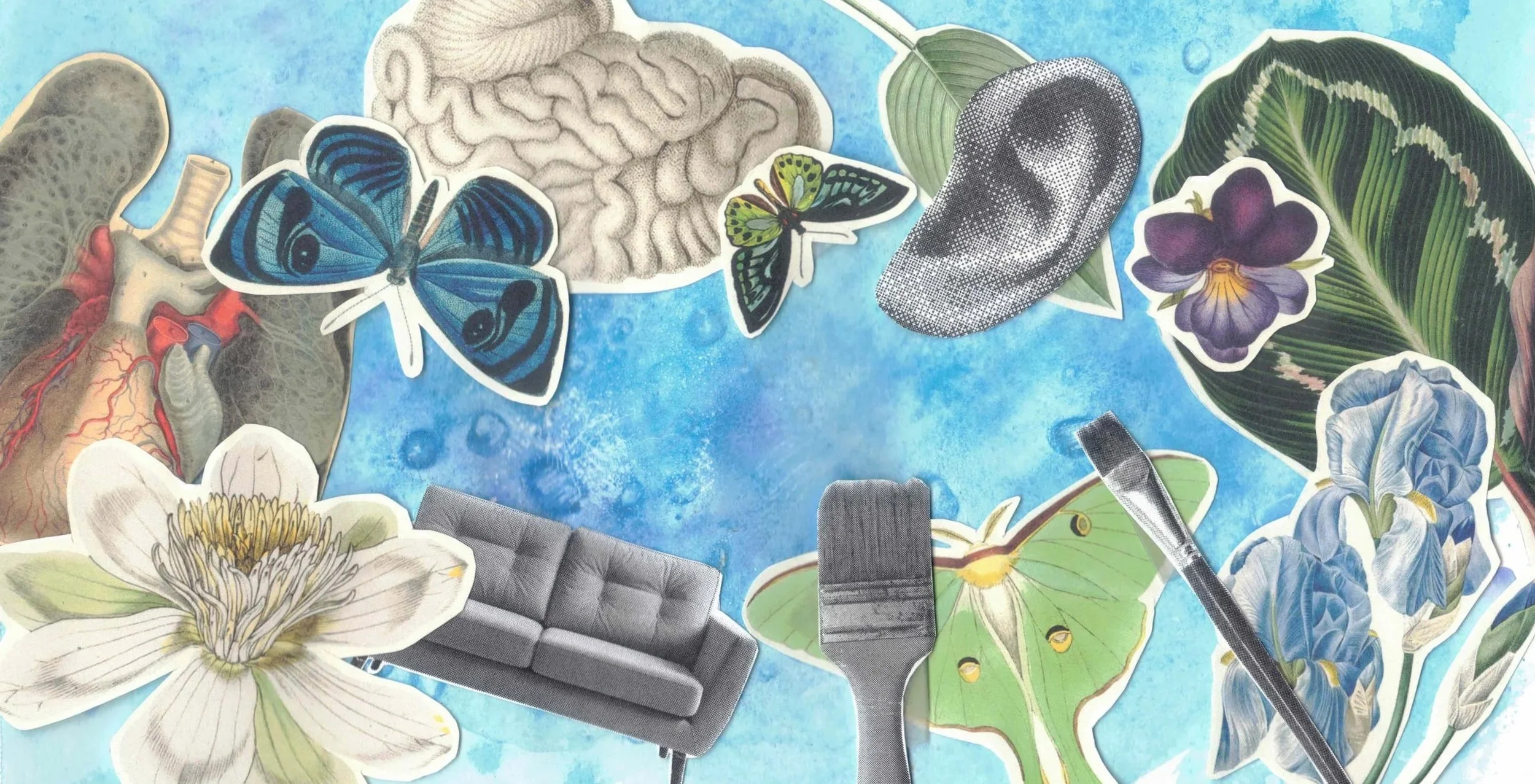
Counseling & Art Therapy
Due to mental health licensure laws, counseling & art therapy are only available to Illinois residents. Virtual sessions are available throughout the state. In person sessions are available in Chicago (Uptown). For those outside of Illinois, scroll down to learn more about non-clinical support options .
I offer counseling (psychotherapy/talk therapy) and art therapy to teens and adults, with a focus on supporting those living with disability, chronic illness, and rare conditions. Much of my work with clients centers on the psychosocial impact of these lived experiences, including, but not limited to, challenges related to:
Grief and loss
Anxiety and depression
PTSD and complex trauma
Medical and surgical trauma
Anger
Chronic pain
Fatigue and burnout
Self-advocacy
Identity exploration
Self-esteem and shame
Body image
Dating and relationships
Codependency
Family dynamics
My highest goal as a therapist is to build a strong and trusting therapeutic relationship with my clients, as I believe meaningful change can only happen within a space that feels safe, affirming, and genuinely collaborative. I value taking the time to truly know my clients as whole people, and I practice thoughtful self-disclosure when appropriate, understanding that mutual vulnerability can be an important part of building trust. As a therapist, I wish to show up as a full human and not a blank slate or all-knowing expert. In sessions, you will see my personality, humor, and authentic emotions come through as we process your experiences together. I believe psychotherapy is not about fixing a person, but about creating a steady space where we can turn toward what is true, tend to the parts of ourselves that have been silenced or overwhelmed, and integrate our experiences with compassion and care.
My clinical approach is person-centered, relational, and integrative, drawing from evidence-based modalities such as Acceptance and Commitment Therapy (ACT), Internal Family Systems (IFS), and Somatically-Oriented Therapies such as Mindfulness Based Stress Reduction (MBSR). These approaches can be incorporated through both talk therapy and art therapy, depending on each client’s needs and preferences. I enjoy helping clients develop more self-compassion, accept and move through difficult emotions, and reclaim a greater sense of agency in their lives. I also bring a broader, systems-aware lens into the therapy room, acknowledging how marginalization and intersecting social identities shape mental health, relationships, and access to care.
Learn more about counseling and art therapy details (such as accessibility, insurance, etc.) in the FAQ section below.
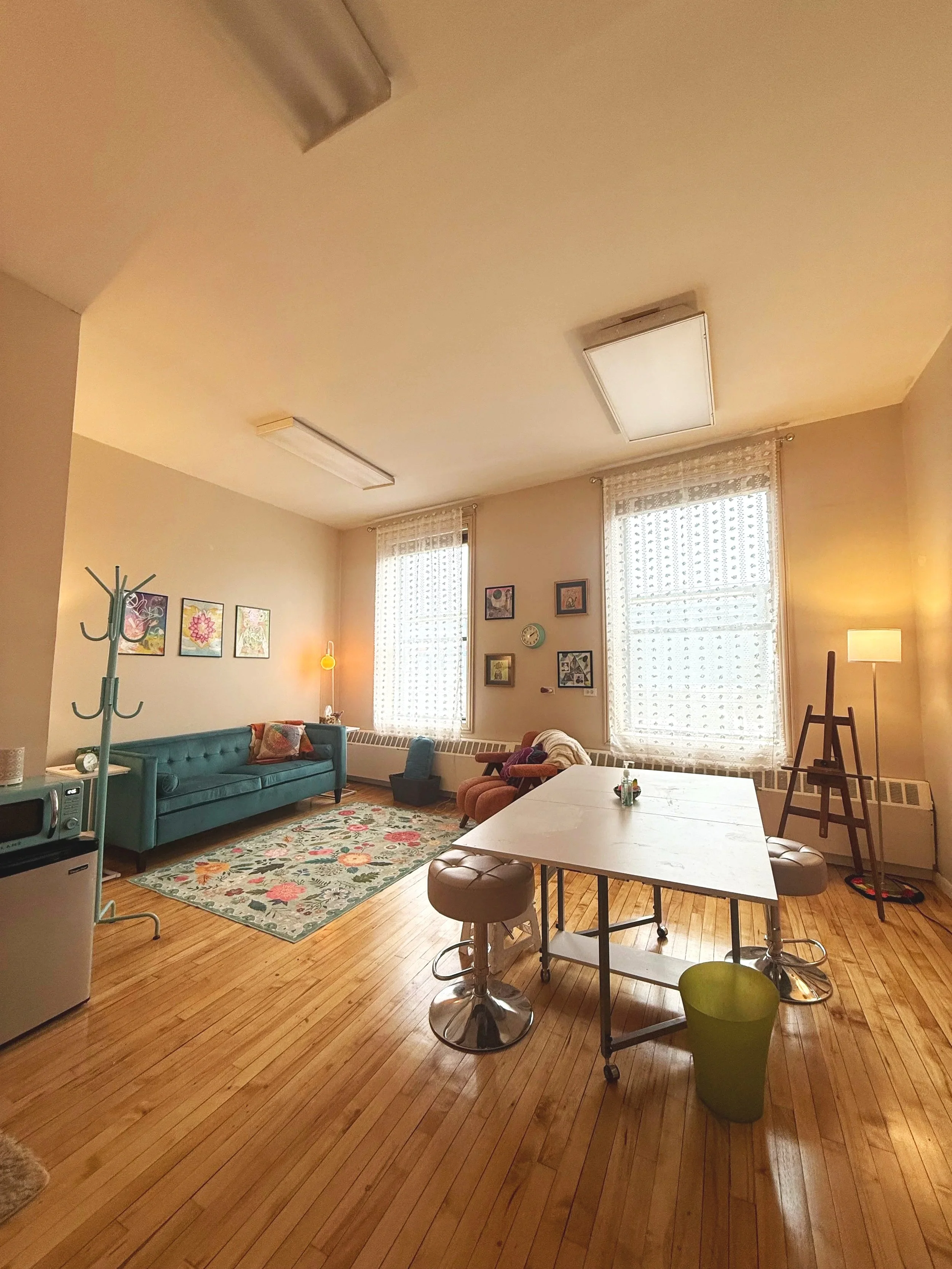
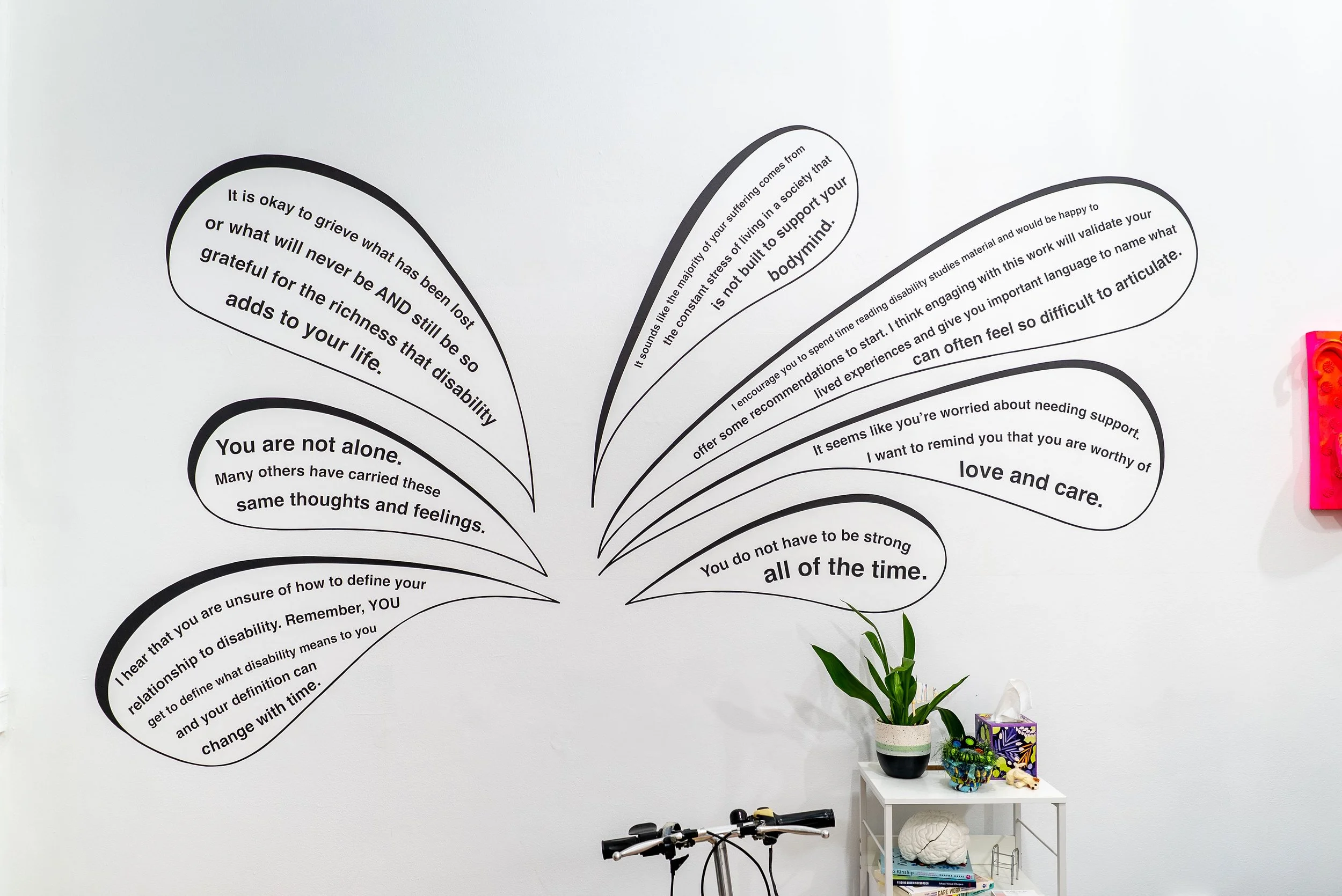
My office/art therapy studio is located in Uptown, right off the Wilson Red Line stop. The space is set up for traditional talk therapy as well as art making.
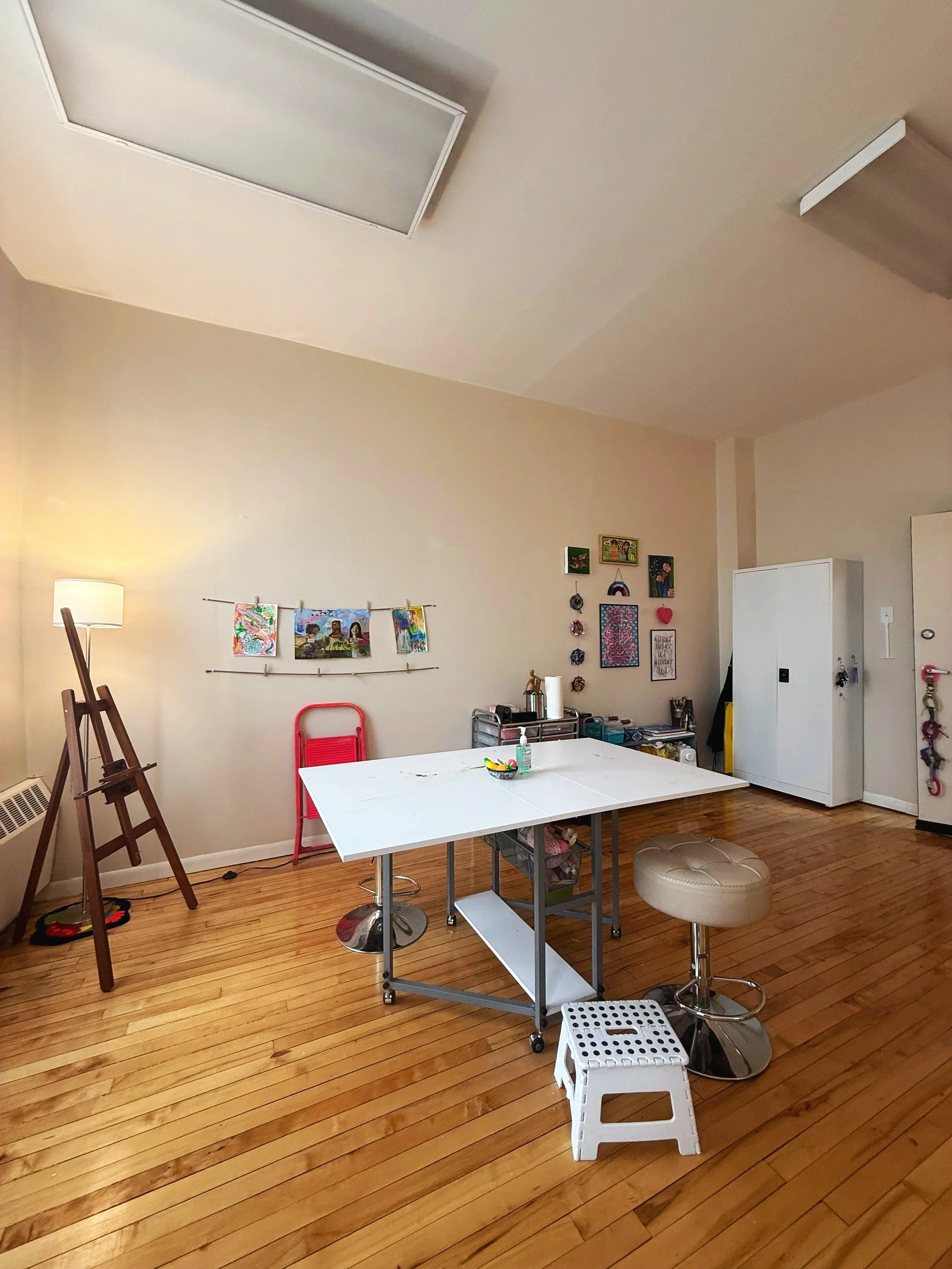
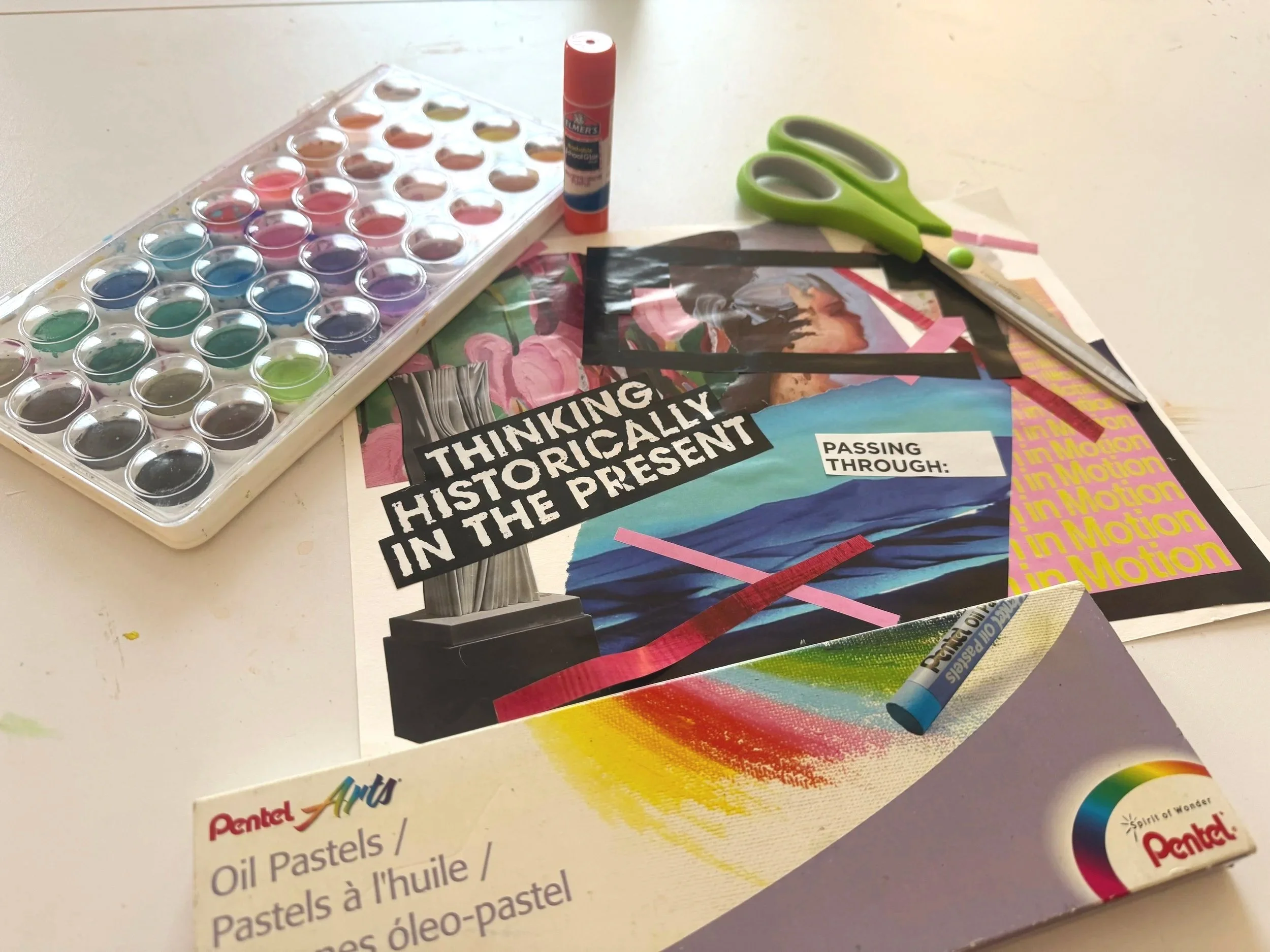
The studio has a variety of art materials in-house such as magazines for collage, watercolor, acrylic paint, clay, yarn, and much more. Clients can use the provided materials or bring their own.
Non-Clinical Support Services:
Available anywhere virtually and in person for residents of Chicago, IL. Learn more information below in the FAQ section.
Individual and/or Family Consultation
Ideal for those living outside of Illinois, I offer short-term, non-clinical consultations for individuals and families impacted by disability, chronic illness, or rare conditions. These sessions are not psychotherapy and do not involve diagnosis or treatment. Instead, they provide a supportive space to talk through the emotional and relational impact of these experiences with someone who understands both professionally and personally. Clients should think of this service as “coaching” vs. “therapy”.
Consultations may include emotional support, reflection, psychoeducation, and guidance around navigating systems, advocating for needs, and identifying appropriate therapeutic or community-based resources. This service is designed for people seeking release, clarity, validation, and direction, not ongoing clinical care. Should you require more long term mental health support, I am more than happy to guide you in finding the right provider in your state and in your insurance network.
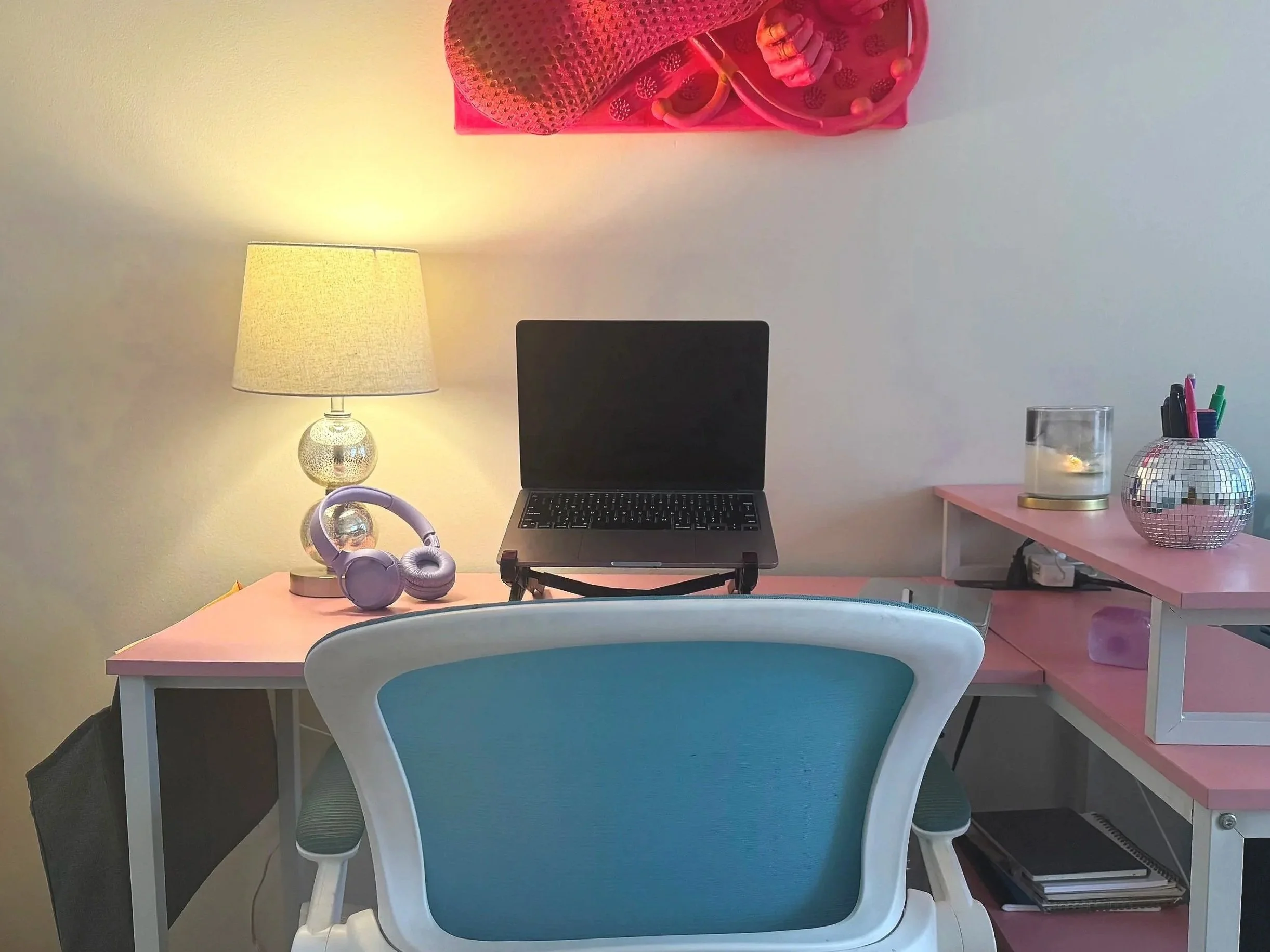
Supported Art-Making Sessions
For those looking to explore creative processing and art-making as a tool for self-care, self-reflection, or self-expression, I offer individual supported art-making sessions both in person and virtually. In these non-clinical sessions, we collaborate to structure art-making in a way that is meaningful and supportive for you. We may use art to explore emotions, reflect on personal experiences, process challenges, or simply engage in creativity for enjoyment and relaxation. I provide guidance on materials, techniques, and approaches, while ensuring the sessions are paced to your comfort and goals. You can also explore group workshops and other creative experiences I offer on my “Speaking & Workshops” page.
Follow me on Instagram @bri.beck for any announcements about upcoming workshops or therapeutic art groups.
Frequently Asked Questions:
-
I currently have a limited amount of daytime availability for new counseling & art therapy clients. I also have a waitlist in case our availability does not align at this time.
I am available for non-clinical support services. Please email me if you are interested at hello@bribeckcounseling.com
-
Scheduling and onboarding is dependent upon the service.
For all support services, please email me at hello@bribeckcounseling.com to introduce yourself and what you are interested in. You can also use any contact form on this website.
Counseling and Art Therapy services involve a more extensive onboarding and intake process where you will complete a series of intake and consent forms via my EHR, Simple Practice, which is a HIPAA compliant platform.
Many of my clients work with me weekly for an extended period (3-6 months or so) until they notice relief and more alignment with their initial goals. Some choose to continue meeting weekly, biweekly, monthly, or as-needed for longer term support and a consistent part of their self-care routine.
Non-clinical support services are scheduled as-needed and are designed to be more short-term.
These services also involve a short intake questionnaire and a series of consent forms to sign prior to meeting.
To schedule non-clinical services, please email me at hello@bribeckcounseling.com and I will send you a link to my availability where you can schedule an appointment time that works for you. Sessions will take place via Google Meet.
-
Counseling & Art Therapy Services:
I am an in-network provider with Blue Cross Blue Shield PPO and United Healthcare PPO plans. For those not insured in these networks, I am happy to speak with you about your “out of network” benefits and provide you with a “superbill” to submit to your insurance company for potential reimbursement.
Self Pay Rate: $185 (55 minute session)
Reduced-Rate Options:
*I offer a limited number of reduced-rate slots on my caseload for those with financial need. At this time, those slots are full.Non-Clinical Support Services:
These services are not covered under insurance.
Individual and/or Family Consultation Session: $175 (55 minute session)
*For individuals and families impacted by skeletal dysplasia, financial support for consultations is available through the Little Legs Big Heart Foundation. Please email me or kristen@littlelegsbigheartfoundation.org for more information on this offering.
Supported Art-Making Sessions: $175 (55 minutes); $225 (90 minutes); $275 (120 minutes)
*Look out for free support opportunities often sponsored by disability-related organizations as well as reduced-fee or “pay-what-you-can” offerings on Instagram @bri.beck
-
While my work centers disability, chronic illness, and rare conditions, I currently work with individuals both with and without disabilities. That said, my long-term intention is to prioritize serving people within disability communities, given the limited number of clinicians who specialize in this area.
You do not need to have everything figured out about how you identify. Many people are still exploring their relationship to disability identity, and that uncertainty is welcome here. Caregivers, family members, and others impacted by a loved one’s disability are also welcome, and I occasionally offer dedicated support spaces for caregivers.
If you are unsure whether this work would be a good fit, I invite you to reach out so we can talk it through.
-
Yes. It is very common for individuals living with disability, chronic illness, and rare conditions to also experience forms of neurodivergence such as ADHD, ASD, AuDHD, OCD, and more.
I am neurodiversity-affirming and neurodiversity-informed, and I work with many neurodivergent clients in my practice.
While I have significant experience in this area, my approach centers on emotional processing, identity development, relational patterns, and the impact of navigating systems that were not designed with neurodivergent people in mind. If you are seeking highly structured or skills-based support such as executive functioning coaching or targeted OCD protocol treatment, I may recommend adding a provider who specializes in those areas to ensure you receive the most comprehensive support possible.
Though I am affirming of all folks living with disability, I also recommend that those living with psychiatric conditions such as eating disorders, sleep/wake disorders, or disorders involving psychotic features seek specialized care to meet their support needs.
-
The American Art Therapy Association defines art therapy as “an integrative mental health and human services profession that enriches the lives of individuals, families, and communities through active art-making, creative process, applied psychological theory, and human experience within a psychotherapeutic relationship.”
In practice, art therapy often combines traditional talk therapy with the additional vocabulary of art materials. A session might begin with a brief verbal or art-based check-in, followed by time for art-making related to whatever concern or theme feels most present. Either during or towards the end of the session, we then reflect together on the product, process, and any insights, emotions, or questions that emerge. Art can also be incorporated into primarily talk-based sessions as a grounding tool or for stimming. You are always welcome to move between artistic and verbal processing at your own pace.
Art therapy is especially helpful for trauma and for processing embodied experiences connected to disability, chronic illness, or rare conditions. Many experiences, particularly medical trauma or long-term health stress, are stored in the body and can feel difficult to organize into words. Art-making offers another pathway. It can provide a contained and compassionate way to approach painful material, externalize it, and see it from a new perspective. The creative process allows overwhelming or fragmented experiences to become something tangible, something you can re-shape, respond to, and even re-imagine. By engaging sensory, emotional, and cognitive parts of the brain at once, art therapy often deepens insight beyond intellectual understanding and supports integration in a way that feels lived and embodied.
When relevant, I also incorporate aspects of the Disability Art movement and disability culture into our work. This might include exploring disability as a source of identity, creativity, resistance, and community, rather than only through a medical lens. For some clients, engaging with Disability Art frameworks can open new ways of understanding their experiences and situating them within a broader cultural and collective context so that they feel less alone.
And importantly, art therapy is always an invitation, not a requirement. If you are not interested in incorporating art into your sessions, we can focus fully on talk therapy.
-
I offer brief 15–20 minute phone or video consultations for new counseling and art therapy clients. Building a strong, trusting therapeutic relationship is essential, and these calls give us a chance to see if we’re a good fit and ensure I can meet your specific needs.
For those interested in non-clinical support, I’m happy to answer questions via email before scheduling a session.
-
Accessibility can mean different things for different people, so I want to answer this thoughtfully. As a mobility aid user myself, the space meets my needs and includes:
A ground-level entrance
A large elevator (the studio is on the 3rd floor)
An ADA-accessible bathroom on the same floor
Ample space for wheelchair maneuverability
For those with sensory considerations, a few things to note:
The studio is next to the CTA Wilson Red Line stop, so the train can occasionally be heard softly during sessions
Overhead fluorescent lights are present, but I typically keep them off, using natural light and soft lamps when needed
If you have specific access needs, I will do my best to accommodate them, whether for in-person or virtual sessions. Please don’t hesitate to reach out with any questions or concerns.